BEHIND THE SERIES: WHY WE CREATED THE FORGOTTEN FILES
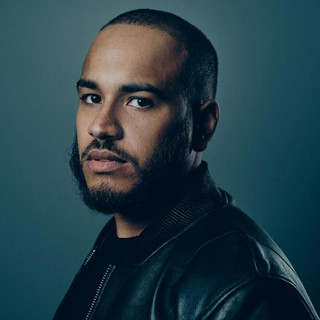

The Forgotten Files was created from a world its writers know first-hand.
Created and written by Tristram Anyiam and Chelsea Anyiam, the series draws on years of professional experience within residential children's care and a shared belief that some of the most important stories surrounding young people in care remain unseen outside the system.
Tristram currently works directly within residential children's care, supporting young people through the realities of everyday life in a children's home.
Chelsea brings extensive experience from senior leadership within the sector, having worked as both a Registered Manager and Registered Individual, and now running her own children's care home.
Between them, they have experienced the care system from different perspectives, from the everyday relationships built between staff and young people to the safeguarding decisions, professional pressures and responsibilities that exist behind the scenes.
That experience became the foundation for The Forgotten Files.
WHY THIS STORY MATTERS
There are thousands of young people living within the care system, each with their own history, relationships, ambitions, vulnerabilities and reasons for being there.
Yet their lives are often understood from the outside through statistics, headlines or the contents of a case file. We wanted to tell a different kind of story.
One that allows audiences to spend time with the young people themselves. To see the humour alongside the trauma, the friendships alongside the conflict, and the ordinary teenage experiences that continue regardless of what might be written in an assessment.
Most importantly, we wanted to explore the fundamental human need to belong.
For a young person who has experienced rejection, instability or repeated changes of placement, attention and acceptance can carry enormous weight. Someone who appears to offer friendship, money, protection, affection or a sense of family can quickly become important to them.
And sometimes that vulnerability is deliberately exploited.
WHEN VULNERABILITY IS EXPLOITED
A major strand running through The Forgotten Files is the grooming and exploitation of vulnerable young people.
The series explores issues associated with Child Sexual Exploitation (CSE) and Child Criminal Exploitation (CCE), including how grooming does not always begin with threats or obvious criminal behaviour.
It can begin with attention. A lift somewhere. Food. Money. Gifts. Alcohol. A place to spend time. Someone older appearing to listen when nobody else seems to.
Small interactions can gradually develop into relationships involving manipulation, dependency, coercion and exploitation.
For professionals working with young people, recognising those changes can be critical.
A new friendship. Unexplained money or possessions. Changes in behaviour. Going missing. New locations. Increased secrecy. Unexplained injuries. New relationships with older individuals.
Individually, something may appear insignificant. Together, they can tell a very different story.
Sometimes the warning signs are there long before everyone understands what they mean.
DRAMA WITH A PURPOSE
The Forgotten Files is first and foremost a television drama. Its characters and story must engage an audience before they can communicate anything meaningful.
But we also believe drama can create conversations.
We want the series to be valuable not only to audiences, but potentially to residential care providers, support workers, social-care professionals and others responsible for safeguarding young people.
By dramatising how grooming and exploitation can develop gradually, the series aims to encourage people to think more deeply about the behaviours and circumstances that may sit behind what they are seeing.
Why has this young person suddenly started going missing?
Where did that money come from?
Who keeps collecting them?
Why are they suddenly protective of a new older friend?
Why has their behaviour changed?
Rather than providing simple answers, the drama asks its audience to notice the questions.
If those conversations help even one professional recognise a pattern earlier, challenge something that doesn't feel right, or look beyond a young person's behaviour to ask what might actually be happening to them, then the series has achieved something beyond entertainment.
THE PEOPLE BEHIND THE FILES
Our experience has also taught us that residential care cannot simply be portrayed as a world of victims and failing professionals. The reality is far more complicated.
There are extraordinary people working within children's care. There are also overstretched services, mistakes, difficult decisions and occasions when opportunities to intervene are missed.
And the young people themselves cannot be reduced to their trauma.
They laugh. They fall in love. They push boundaries. They argue over games. They make friends. They make mistakes. They can be hilarious, frustrating, intelligent, resilient and vulnerable, sometimes within the same afternoon. We wanted that humanity on screen.
We don't want audiences simply to feel sorry for these young people.
We want audiences to know them.
WHY THE FORGOTTEN FILES?
A file can record a placement.
It can record an incident.
It can identify a risk.
It can document a missing episode, safeguarding concern or professional decision.
But a file cannot completely explain why a young person trusted somebody, why they were desperate to belong, what they were frightened of, or what was happening when nobody was watching.
That distance between what is recorded and what is really happening sits at the heart of The Forgotten Files.
Through the series, we want to explore care, exploitation, identity, family, loyalty, responsibility and belonging while telling a gripping contemporary British drama grounded in a world we understand.
Because safeguarding begins with more than reading what is written about a young person.
It begins with seeing them.
TRISTRAM ANYIAM & CHELSEA ANYIAM
Creators & Writers

Comments